

Transmitting and teaching is a passion
Children in particular have always been at the heart of this commitment.
From the École Française Internationale de Pattaya to the staff room of the Lycée Jules Verne in Guatemala — via boarding schools and missions against school dropout — one common thread: an unwavering concern for the wellbeing and future of young people.
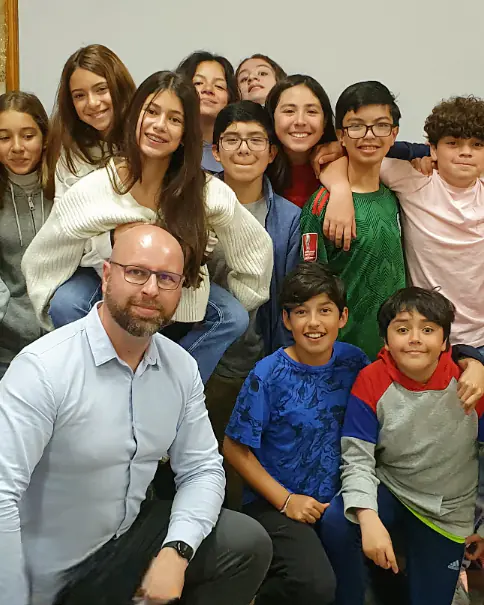
What drives me
Throughout my career, I have taught, guided and supported young people from very different cultures and levels. These experiences have shaped my conviction: supporting a young person means first understanding them and giving them a vision of their own future.
“It is from my research, reflection and field experience that teaching methods adapted to each individual are born.”
Three continents, one compass
From the École Française Internationale de Pattaya — my first teaching experience, where I discovered my calling for transmission — to the Lycée International Français Jules Verne in Guatemala, I have had the chance to teach in radically different contexts: from kindergarten to high school, technology and English, mixed-level classes, French and English curricula, students at risk of dropping out.
This diversity has shaped an attentive, demanding and deeply human pedagogy, capable of adapting to each child — whatever their learning culture or starting point.
A commitment beyond the classroom
As a boarding supervisor at Lycée Heinrich Nessel, I supported groups of 80 young people aged 15 to 21. As an English teacher at MLDS, I taught young people on school reintegration programs. As deputy head at BJP Elite Academy in Pattaya, I oversaw two distinct curricula in a multicultural, multilingual setting.
Each role has reinforced one conviction: to educate is first to listen — then to create the conditions for a young person to imagine their future.
To educate is to help every young person imagine a future that resembles them.